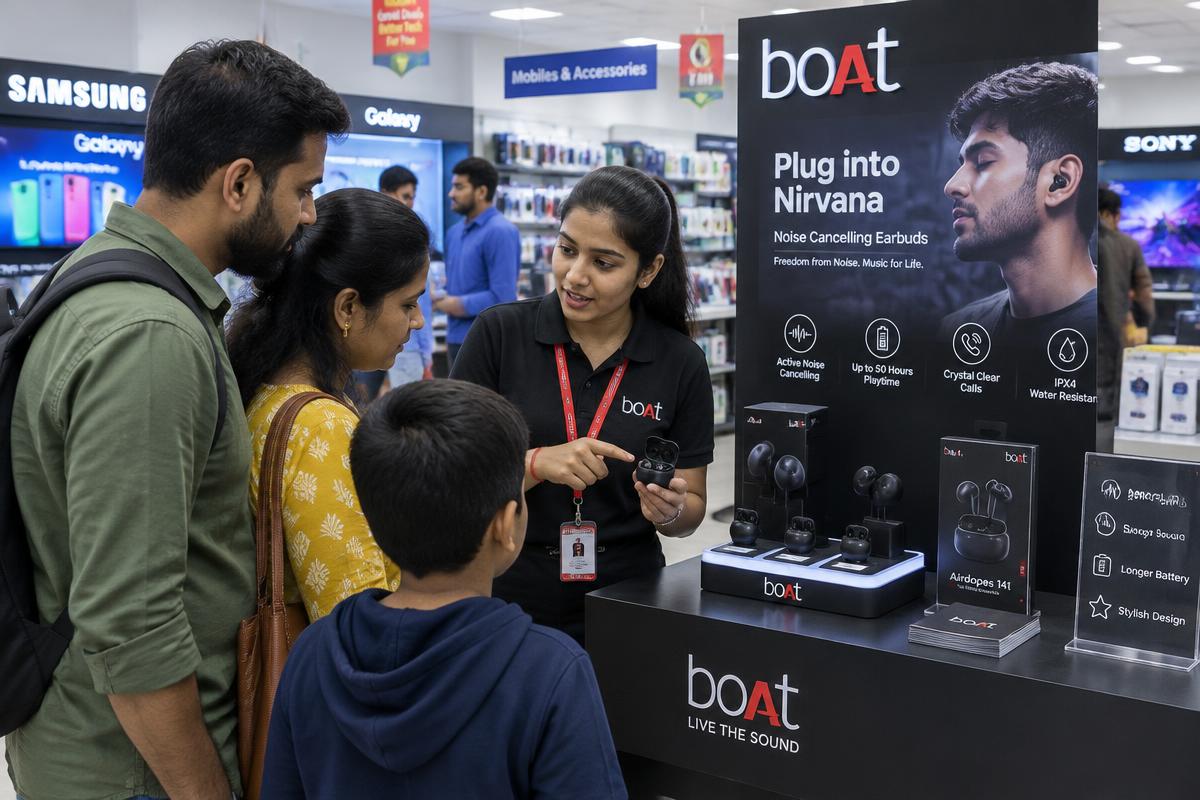
Retail & Sampling
Retail Marketing Agency in India
Retail activation programs across modern and general trade.
Overview
What retail marketing is, and when it works
Retail marketing is the channel-wide programme that coordinates staffing, point-of-sale materials, visibility audits and retailer incentives across a defined store universe at the same time, rather than any single tactic run in one store. It is the orchestration layer that decides how a fixed budget is split across those cost heads and sequenced across hundreds of counters at once.
A single store looks the same whether or not a brand runs a programme around it; the lift comes from the same combination of visibility, staffing and incentive landing consistently across an entire store list, which no store-level tactic run in isolation can replicate. That consistency only survives if the budget split across manpower, fabrication, venue and reporting is fixed up front, because a rollout that drifts entirely into branding with nobody to deploy it, or entirely into staffing with nothing branded to sell against, fails for a budgeting reason rather than an execution one.
Who it reaches
Retail store owners, counter staff and shoppers across a defined store universe spanning modern and general trade.
Best suited for
- Chains needing coordinated POSM, staffing and incentives across a full store list at once
- Launch windows where many stores must look and sell identically from day one
- Brands whose off-take data shows weak visibility at a specific store tier
- Replacing a fragmented store-by-store vendor set with a single programme owner
- Running a retailer incentive scheme alongside staffing and visibility work
- Measuring return across a store universe rather than any single counter
What's included
- Store mapping
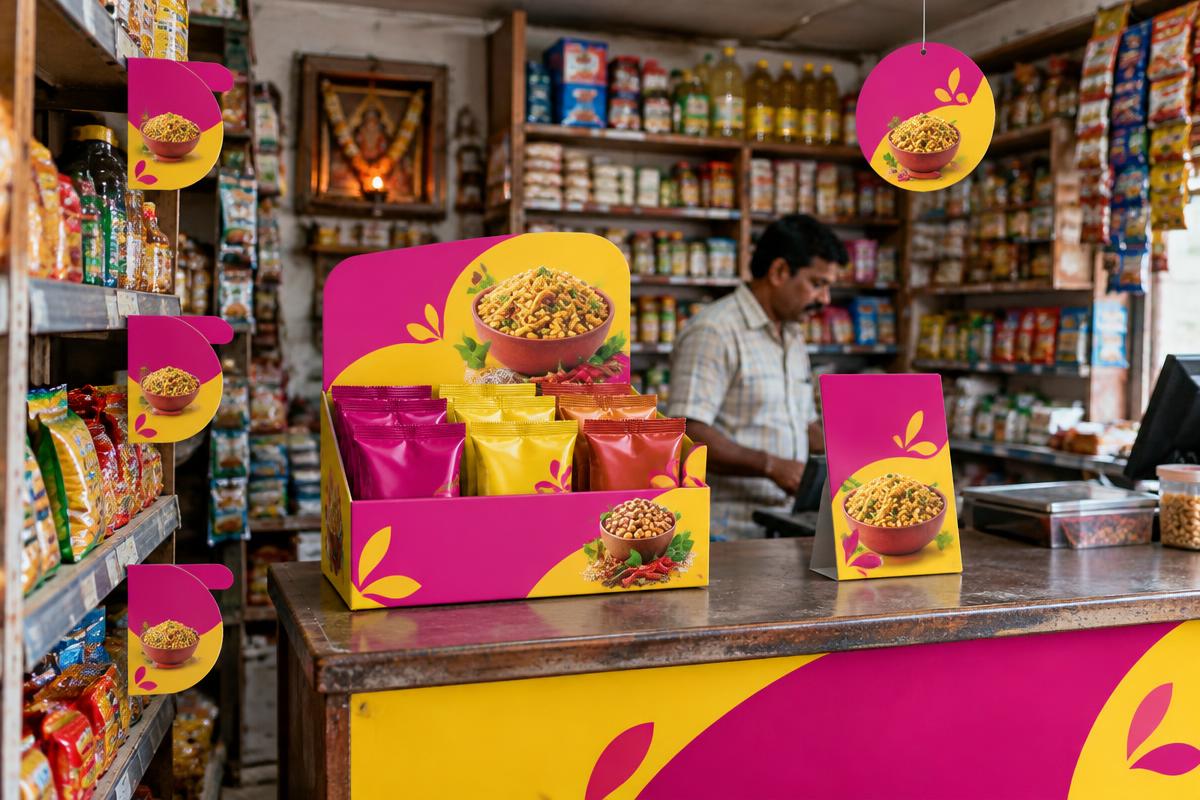
- POSM
- Visibility audits
- Incentive programs
Investment
What retail marketing costs in India
Indicative investment
₹2L – ₹30L per program
Indicative pricing for retail marketing is ₹2L – ₹30L per program, exclusive of GST at 18%. It is a planning band, not a quotation — the variables that actually move it are venue-days, team size, how custom the build is, and venue or permission fees.
| Cost head | What it covers | Share of budget |
|---|---|---|
| Manpower | Promoters, supervisors, anchors, training and attendance tracking | 25%–40% |
| Fabrication & materials | Kiosk or stall build, branding, POSM, consumables | 20%–35% |
| Venue & permissions | Space rental, society or mall fees, municipal and police NOCs | 15%–30% |
| Logistics | Transport, storage, setup and dismantling | 8%–15% |
| Reporting & tech | Live dashboard, data capture, geo-tagged photo proof | 3%–8% |
Formats
Retail Marketing formats we run
Store universe mapping & tiering
Classifying every store in scope by footfall and sales potential, so budget and staffing follow the tier rather than being spread evenly.
POSM and visibility rollout
Deploying point-of-sale materials and shelf visibility to one consistent standard across the store list, timed to a launch or seasonal window.
Merchandiser and promoter deployment
Placing staffing against the counter list built in the mapping phase, concentrated on the tiers that justify the day rate.
Retailer incentive programme
A scheme rewarding store owners or counter staff for stocking or recommending a product, run with written redemption terms rather than a verbal promise.
Visibility and share-of-shelf audit
A recurring audit cycle checking POSM compliance and shelf share store by store, with photo proof rather than a self-reported tick.
Modern trade and general trade combined rollout
Running the same programme logic across organised retail and kirana counters in one catchment, since the two channels rarely respond to identical tactics.
Worked example
A costed example you can check
Computed from our published tier 1 day rates, not estimated.
What 24 days of retail marketing actually costs
Take a 24-day retail marketing programme in a tier 1 metro, staffed with 9 people (6 promoters, 2 supervisors and 1 city manager), running at a promoter day in one modern-trade store. Here is the direct cost, computed at tier 1 rates rather than estimated.
| Cost head | Basis | Amount |
|---|---|---|
| Team | 6 promoters, 2 supervisors and 1 city manager across 24 activation days, at tier 1 day rates | ₹3,62,400 |
| Venue & permissions | 24 venue-days at the mid-point of the retail store band | ₹1,14,000 |
| Subtotal | Direct costs, excluding GST | ₹4,76,400 |
| GST | At the applicable rate on services | ₹85,752 |
| Total | Indicative, including GST | ₹5,62,152 |
Contacts engaged
3,720
At the mid-point of the planning band
Cost per contact
₹128
Direct cost ÷ contacts
Cost per lead
₹582 – ₹1,599
At 298–818 leads captured
Direct costs only. Fabrication, logistics and reporting are additional and typically add 31% to 58% of the programme budget. GST is shown at 18%. These are indicative planning figures, not a quotation.
Process
How we run retail marketing
- 01Days 1-7
Store universe mapping & tiering
Classify every store by footfall and sales potential and decide which tiers get staffing, which get POSM only and which get both.
- 02Days 5-10
Budget split & format mix sign-off
Fix the spend split across manpower, fabrication, venue and reporting before any production starts, so the mix cannot drift mid-programme.
- 03Days 10-20
POSM production & staffing mobilisation
Produce materials to one print standard and recruit or confirm staffing against the tiered store list in parallel.
- 04From go-live
Rollout across the store list
Deploy POSM and staffing together, store by store, with a daily report showing coverage against the planned list.
- 05Fortnightly
Store-tier review & reallocation
Review results by store tier rather than in aggregate, and reallocate budget toward the tiers actually producing off-take.
Timing that changes the result
Demand and response peak around September to November — Navratri, Durga Puja, Dussehra and Diwali — the highest-response and highest-cost window of the year. Book teams, venues and fabrication early for that window, because vendor pricing moves with it.
Measurement
What gets reported, and how
Every campaign reports the same way: attendance against roster, geo-tagged and time-stamped photographs per venue, contacts engaged counted on the capture tool rather than estimated, and leads verified by callback before they are counted. Weak locations show up in the first week, which is the only point at which they can still be fixed.
| Metric | How it is captured |
|---|---|
| Store universe coverage against the planned list | Recorded daily on the live dashboard, against the agreed target |
| Visibility and share-of-shelf audit score per store tier | Recorded daily on the live dashboard, against the agreed target |
| Off-take or sell-through lift during the programme window | Recorded daily on the live dashboard, against the agreed target |
| POSM compliance rate at audit | Geo-tagged, time-stamped check-in at shift start, reconciled against roster |
| Retailer scheme redemption rate | Computed from actuals against the approved rate card |
| Programme spend against the approved budget split | Computed from actuals against the approved rate card |
Compliance
Permissions and compliance
Approvals sit on the critical path, not alongside it.
- Chain or distributor sign-off for store-level activity and secondary display
- Retailer scheme terms filed and communicated in writing
- Minimum-wage and working-hour compliance for all deployed staff
- Structural and fire-safety compliance for any installed POSM fixture
- Data-handling terms for any retailer or shopper information captured
What goes wrong
Common retail marketing mistakes
Each of these is something we have had to fix on a campaign someone else planned.
- Treating every store in the universe identically instead of tiering by potential
- Launching POSM before the staffing roster is ready, so branding sits unsupported
- Skipping the visibility audit, so POSM compliance is assumed rather than verified
- Running a retailer incentive scheme with no written redemption terms
- Reporting results at the city level, which hides which store tier is underperforming
Treating every store in the universe identically instead of tiering by potential
Coverage
Retail Marketing by city
Each city is staffed by a local team rather than a travelling one.
Tier 1 metros
Tier 2 cities
- Retail Marketing in Jaipur
- Retail Marketing in Lucknow
- Retail Marketing in Chandigarh
- Retail Marketing in Indore
- Retail Marketing in Bhopal
- Retail Marketing in Surat
- Retail Marketing in Vadodara
- Retail Marketing in Rajkot
- Retail Marketing in Nagpur
- Retail Marketing in Nashik
- Retail Marketing in Aurangabad
- Retail Marketing in Thane
- Retail Marketing in Navi Mumbai
- Retail Marketing in Kochi
- Retail Marketing in Thiruvananthapuram
- Retail Marketing in Kozhikode
- Retail Marketing in Coimbatore
- Retail Marketing in Madurai
- Retail Marketing in Tiruchirappalli
- Retail Marketing in Salem
- Retail Marketing in Mysore
- Retail Marketing in Mangalore
- Retail Marketing in Hubli-Dharwad
- Retail Marketing in Belgaum
- Retail Marketing in Visakhapatnam
- Retail Marketing in Vijayawada
- Retail Marketing in Guntur
- Retail Marketing in Tirupati
- Retail Marketing in Warangal
- Retail Marketing in Bhubaneswar
- Retail Marketing in Cuttack
- Retail Marketing in Patna
- Retail Marketing in Ranchi
- Retail Marketing in Jamshedpur
- Retail Marketing in Guwahati
- Retail Marketing in Raipur
- Retail Marketing in Bilaspur
- Retail Marketing in Kanpur
- Retail Marketing in Varanasi
- Retail Marketing in Agra
- Retail Marketing in Prayagraj
- Retail Marketing in Meerut
- Retail Marketing in Ghaziabad
- Retail Marketing in Faridabad
- Retail Marketing in Ludhiana
- Retail Marketing in Amritsar
- Retail Marketing in Jalandhar
- Retail Marketing in Dehradun
- Retail Marketing in Jammu
- Retail Marketing in Srinagar
- Retail Marketing in Jodhpur
- Retail Marketing in Udaipur
- Retail Marketing in Kota
- Retail Marketing in Gwalior
- Retail Marketing in Jabalpur
- Retail Marketing in Goa
- Retail Marketing in Siliguri
- Retail Marketing in Durgapur
- Retail Marketing in Puducherry
- Retail Marketing in Shimla
Industries
Categories that use retail marketing
By industry
FAQ
Retail Marketing FAQs
What is retail marketing?+
Retail activation programs across modern and general trade. Retail marketing is the channel-wide programme that coordinates staffing, point-of-sale materials, visibility audits and retailer incentives across a defined store universe at the same time, rather than any single tactic run in one store. It is the orchestration layer that decides how a fixed budget is split across those cost heads and sequenced across hundreds of counters at once.
How much does retail marketing cost in India?+
Indicative pricing is ₹2L – ₹30L per program. The variables that actually move a quote are the number of cities and days, team size, how custom the build is, and venue or permission fees. Tier 1 metro day rates run above tier 2. GST applies at 18%.
Which cities do you cover for retail marketing?+
70 Indian cities, covering every tier 1 metro and the major tier 2 markets, each with a local team rather than a travelling one.
What is included?+
Typical deliverables are store mapping, POSM, visibility audits and incentive programs. Measurement covers store universe coverage against the planned list, visibility and share-of-shelf audit score per store tier and off-take or sell-through lift during the programme window.
How should a retail marketing budget be split?+
As a planning band rather than a fixed number: manpower typically takes 25-40% of the programme, fabrication and POSM 20-35%, venue and permissions 15-30%, logistics 8-15% and reporting or tech 3-8%. Fixing this split before production starts is what stops a rollout drifting entirely into branding with nobody to deploy it.
How is retail marketing different from in-store promotion or visual merchandising?+
Both of those are formats; retail marketing is the programme that decides how many stores get which format, in what sequence, against what budget split. A single store's shelf or promoter is a tactic, and retail marketing is the layer that coordinates many of those tactics across a defined store universe at once.
Why tier the store universe instead of treating every store the same?+
Because footfall and sales potential vary sharply within one chain, and a flat allocation under-serves the stores that would actually move volume while over-serving ones that will not. Tiering lets staffing and POSM budget follow potential rather than being spread evenly and thinly across the whole list.
Related services
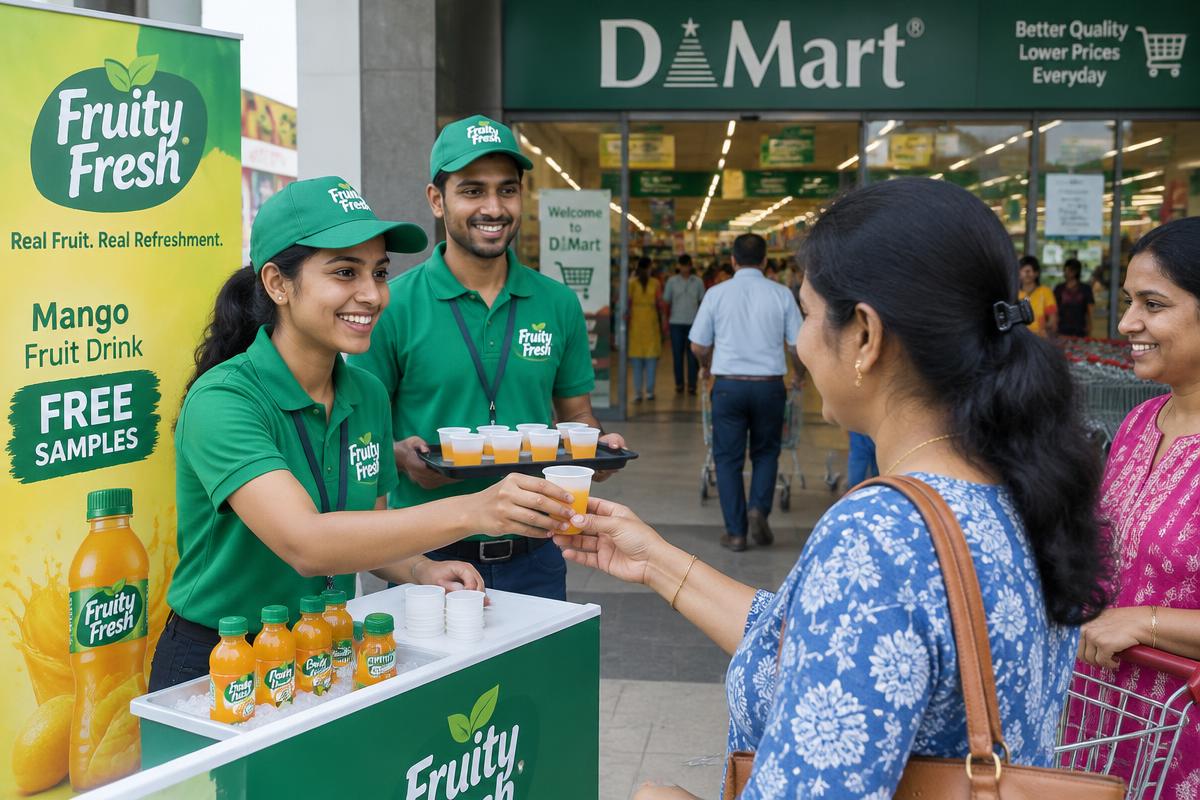
Retail & Sampling
Product Sampling
Targeted product sampling that drives trial and repeat purchase.
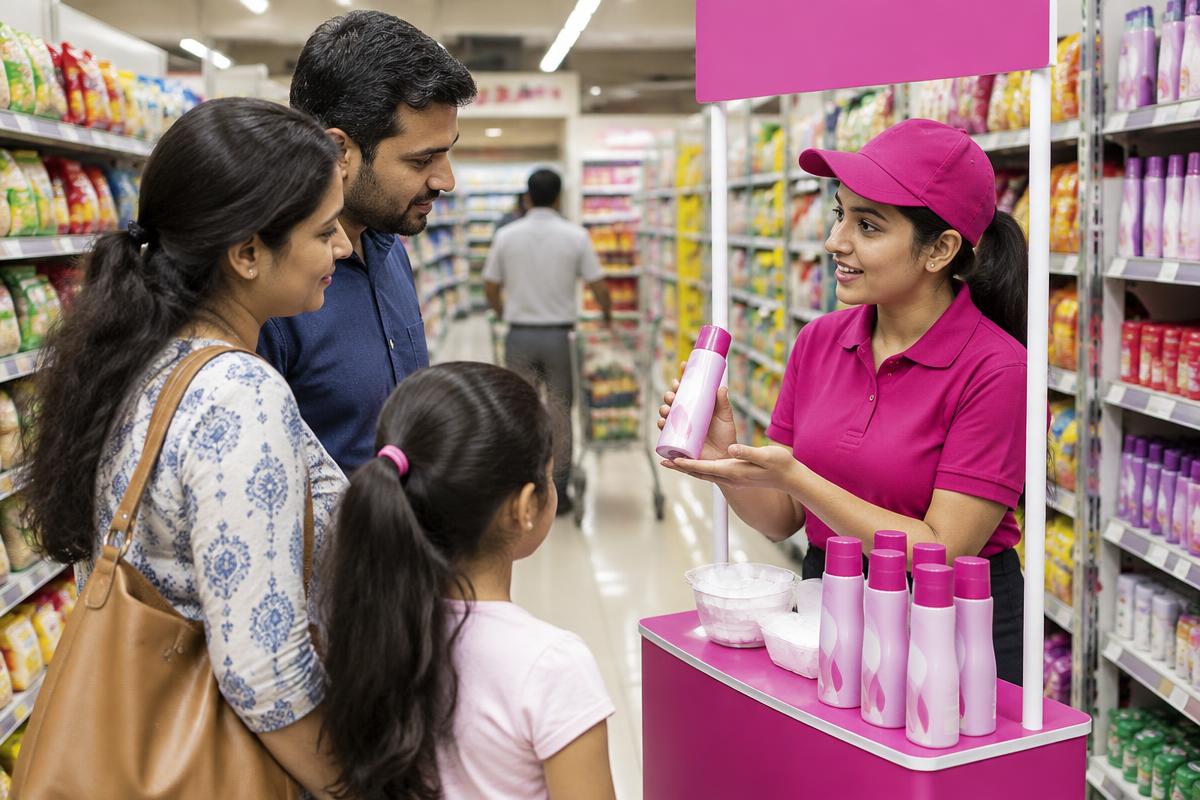
Retail & Sampling
In-Store Promotion
In-store promoters and demos that convert shoppers at shelf.
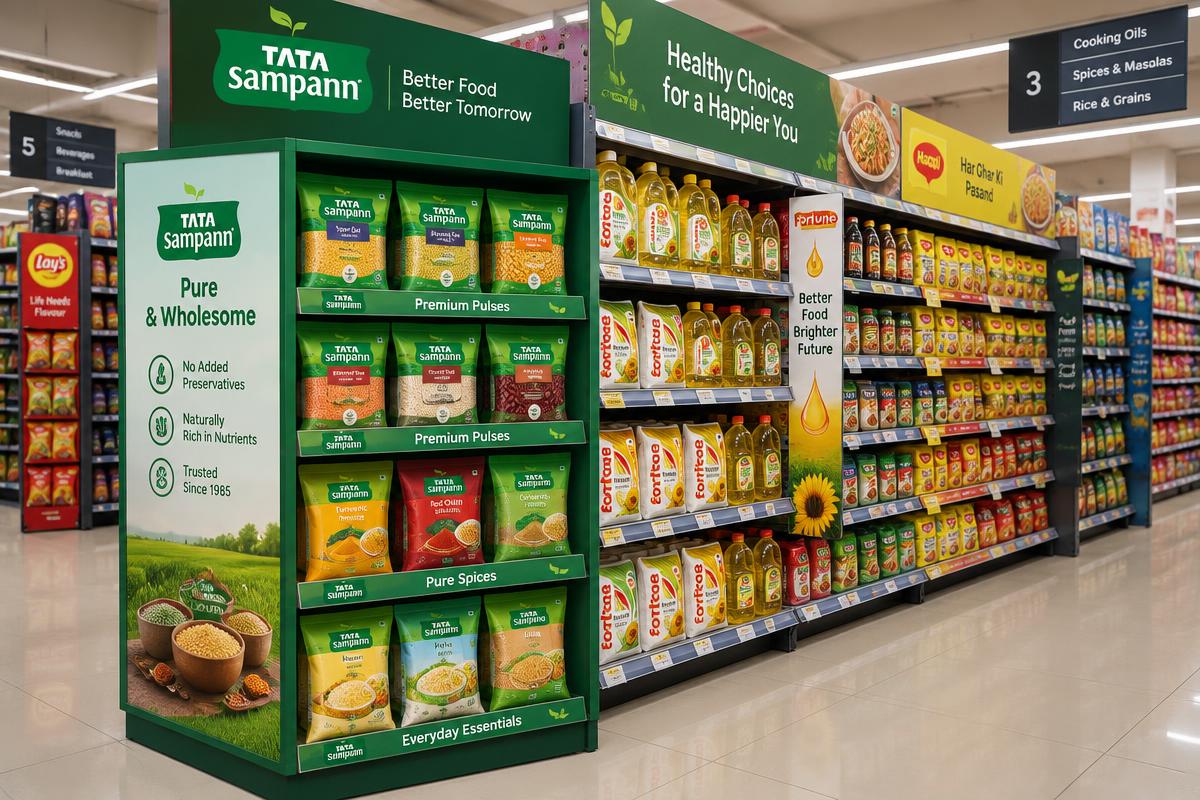
Retail & Sampling
Visual Merchandising
Shelf branding, FSUs and visual merchandising that win the aisle.
Retail & Sampling
POSM & Retail Branding
Point-of-sale materials, shop branding and fixtures.
Retail Marketing guides, pricing and playbooks
- Retail Marketing Cost in India: Price Guide & Budget Breakdown
- How to Plan a Retail Marketing Campaign: Step-by-Step Guide
- Retail Marketing Ideas That Drive Sales: Proven Formats
- Retail Marketing vs Digital Ads: Which Delivers Better ROI?
- How to Choose a Retail Marketing Agency in India: Vendor Checklist
- Retail Marketing for Consumer Electronics: The Complete Playbook
- Measuring Retail Marketing ROI: Formula, Attribution & Worked Example
Related searches
What people look for when they are researching this format.