Retail & Sampling
Door-to-Door Marketing Agency in India
Doorstep campaigns for subscriptions, sampling and lead generation.
Overview
What door-to-door marketing is, and when it works
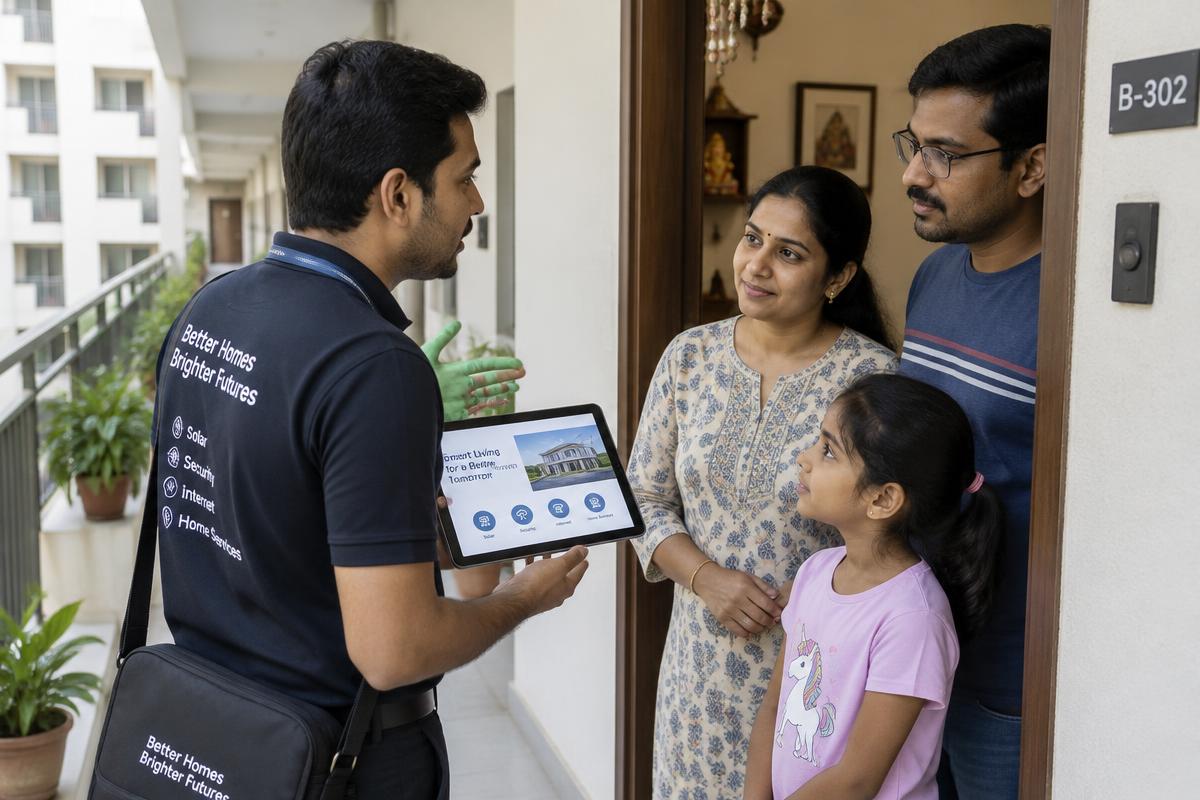
Door-to-door marketing reaches a resident at their own home — inside a society, a neighbourhood or a campus — through a field team that visits household by household, strictly under committee or gatekeeper permission and on the resident's consent. It is the right format for decisions that genuinely get made inside the home, such as a subscription, a connection or a household appliance, and it is treated as consent-sensitive at every step rather than as a volume game.
Certain purchase decisions are made inside the home, in a conversation with whoever actually manages the household, and no shop counter or canopy reaches that person at the moment the decision gets made. Because this format enters a private space rather than a public one, conversion depends on mapping the right households before any door is knocked and on treating each household's consent as the gate for every subsequent step, not on the number of doors covered.
Who it reaches
Residents at home during the visiting window, approached only with the society, RWA or building's permission and the resident's own consent.
Best suited for
- Subscriptions or scheme enrolment that convert better in a face-to-face home visit
- Categories needing a short demo inside the home, such as water purifiers or appliances
- Societies with strong gatekeeping where a canopy or kiosk has no access
- Hyperlocal catchment coverage around a new store or service centre
- Civic or enrolment drives needing door-level reach within a defined area
- Re-visit rounds to convert households missed on the first pass
What's included
- Area mapping
- Trained FOS
- Tablet data capture
- Conversion tracking
Investment
What door-to-door marketing costs in India
Indicative investment
₹20 – ₹80 per household
Indicative pricing for door-to-door marketing is ₹20 – ₹80 per household, exclusive of GST at 18%. It is a planning band, not a quotation — the variables that actually move it are venue-days, team size, how custom the build is, and venue or permission fees.
| Cost head | What it covers | Share of budget |
|---|---|---|
| Manpower | Promoters, supervisors, anchors, training and attendance tracking | 25%–40% |
| Fabrication & materials | Kiosk or stall build, branding, POSM, consumables | 20%–35% |
| Venue & permissions | Space rental, society or mall fees, municipal and police NOCs | 15%–30% |
| Logistics | Transport, storage, setup and dismantling | 8%–15% |
| Reporting & tech | Live dashboard, data capture, geo-tagged photo proof | 3%–8% |
Formats
Door-to-Door Marketing formats we run
Society and apartment-complex canvassing
Field teams working a residential complex under RWA or committee permission, the most common and most controllable setting for this format.
Independent-household neighbourhood canvassing
Coverage of standalone homes in a defined catchment, typically slower per household than a complex because there is no single gatekeeper.
Subscription or scheme enrolment at the doorstep
A structured pitch for a connection, subscription or scheme, closing with enrolment captured on the spot where the resident consents to it.
Doorstep sampling for trial-led categories
A short product trial offered at the door for categories where experience, not explanation, moves the decision.
Lead-capture-only visits
Visits designed only to leave information and capture interest, with no attempt at a sale on that visit, for categories sold later by a follow-up call.
Re-visit rounds
A second pass through households not reached on the first visit, rather than treating an absent resident as covered.
Worked example
A costed example you can check
Computed from our published tier 1 day rates, not estimated.
What 15 days of door-to-door marketing actually costs
Take a 15-day door-to-door marketing programme in a tier 1 metro, staffed with 5 people (4 promoters and 1 supervisor), running at a weekend day in one gated society. Here is the direct cost, computed at tier 1 rates rather than estimated.
| Cost head | Basis | Amount |
|---|---|---|
| Team | 4 promoters and 1 supervisor across 15 activation days, at tier 1 day rates | ₹1,05,000 |
| Venue & permissions | 15 venue-days at the mid-point of the society band | ₹3,97,500 |
| Subtotal | Direct costs, excluding GST | ₹5,02,500 |
| GST | At the applicable rate on services | ₹90,450 |
| Total | Indicative, including GST | ₹5,92,950 |
Contacts engaged
3,900
At the mid-point of the planning band
Cost per contact
₹129
Direct cost ÷ contacts
Cost per lead
₹586 – ₹1,611
At 312–858 leads captured
Direct costs only. Fabrication, logistics and reporting are additional and typically add 31% to 58% of the programme budget. GST is shown at 18%. These are indicative planning figures, not a quotation.
Process
How we run door-to-door marketing
- 01Days 1-5
Area mapping & society outreach
Map the catchment by dwelling type and approach the RWA or society committee for permission before any field activity is planned in detail.
- 02Days 4-10
Permission & slot confirmation
Secure written permission and agree visiting hours with the committee, so field officers arrive with a confirmed window rather than an assumed one.
- 03Days 7-10
Field officer training
Train on the pitch, the consent script and the data-capture process, and issue identity badges every officer must carry and show.
- 04From go-live
Doorstep rollout & daily reporting
Visit against the area list with a daily report of households approached, consented, refused and not reached.
- 05Weekly
Re-visit planning
Plan a second pass for households not reached on the first visit, rather than closing them out as covered.
Timing that changes the result
Demand and response peak around September to November — Navratri, Durga Puja, Dussehra and Diwali — the highest-response and highest-cost window of the year. Book teams, venues and fabrication early for that window, because vendor pricing moves with it.
Measurement
What gets reported, and how
Every campaign reports the same way: attendance against roster, geo-tagged and time-stamped photographs per venue, contacts engaged counted on the capture tool rather than estimated, and leads verified by callback before they are counted. Weak locations show up in the first week, which is the only point at which they can still be fixed.
| Metric | How it is captured |
|---|---|
| Households approached against the approved area list | Recorded daily on the live dashboard, against the agreed target |
| Consent-to-engage rate among doors where a resident answered | Computed from actuals against the approved rate card |
| Leads or enrolments captured per field officer per day | Captured digitally with consent, then verified by callback before being counted |
| Refusal and no-entry-building rate, logged rather than hidden | Computed from actuals against the approved rate card |
| Data-capture compliance against the written consent process | Geo-tagged, time-stamped check-in at shift start, reconciled against roster |
| Re-visit conversion rate on households missed the first time | Computed from actuals against the approved rate card |
Compliance
Permissions and compliance
Approvals sit on the critical path, not alongside it.
- Written society or RWA permission before any door is approached
- Identity-badged staff, verifiable by the resident on request
- Consent obtained before any personal detail is captured, not after
- Refusals and no-entry buildings respected and logged, not revisited under pressure
- Written data-handling terms covering storage, use and retention of captured details
What goes wrong
Common door-to-door marketing mistakes
Each of these is something we have had to fix on a campaign someone else planned.
- Approaching doors before the society or RWA permission is actually confirmed
- Field staff without a visible identity badge, which a resident is right to refuse
- Capturing personal details before explaining who is calling and why
- Logging a household as covered after a refusal, which inflates the coverage report
- No written data-handling terms, leaving captured details without a stated retention policy
Approaching doors before the society or RWA permission is actually confirmed
Coverage
Door-to-Door Marketing by city
Each city is staffed by a local team rather than a travelling one.
Tier 1 metros
Tier 2 cities
- Door-to-Door Marketing in Jaipur
- Door-to-Door Marketing in Lucknow
- Door-to-Door Marketing in Chandigarh
- Door-to-Door Marketing in Indore
- Door-to-Door Marketing in Bhopal
- Door-to-Door Marketing in Surat
- Door-to-Door Marketing in Vadodara
- Door-to-Door Marketing in Rajkot
- Door-to-Door Marketing in Nagpur
- Door-to-Door Marketing in Nashik
- Door-to-Door Marketing in Aurangabad
- Door-to-Door Marketing in Thane
- Door-to-Door Marketing in Navi Mumbai
- Door-to-Door Marketing in Kochi
- Door-to-Door Marketing in Thiruvananthapuram
- Door-to-Door Marketing in Kozhikode
- Door-to-Door Marketing in Coimbatore
- Door-to-Door Marketing in Madurai
- Door-to-Door Marketing in Tiruchirappalli
- Door-to-Door Marketing in Salem
- Door-to-Door Marketing in Mysore
- Door-to-Door Marketing in Mangalore
- Door-to-Door Marketing in Hubli-Dharwad
- Door-to-Door Marketing in Belgaum
- Door-to-Door Marketing in Visakhapatnam
- Door-to-Door Marketing in Vijayawada
- Door-to-Door Marketing in Guntur
- Door-to-Door Marketing in Tirupati
- Door-to-Door Marketing in Warangal
- Door-to-Door Marketing in Bhubaneswar
- Door-to-Door Marketing in Cuttack
- Door-to-Door Marketing in Patna
- Door-to-Door Marketing in Ranchi
- Door-to-Door Marketing in Jamshedpur
- Door-to-Door Marketing in Guwahati
- Door-to-Door Marketing in Raipur
- Door-to-Door Marketing in Bilaspur
- Door-to-Door Marketing in Kanpur
- Door-to-Door Marketing in Varanasi
- Door-to-Door Marketing in Agra
- Door-to-Door Marketing in Prayagraj
- Door-to-Door Marketing in Meerut
- Door-to-Door Marketing in Ghaziabad
- Door-to-Door Marketing in Faridabad
- Door-to-Door Marketing in Ludhiana
- Door-to-Door Marketing in Amritsar
- Door-to-Door Marketing in Jalandhar
- Door-to-Door Marketing in Dehradun
- Door-to-Door Marketing in Jammu
- Door-to-Door Marketing in Srinagar
- Door-to-Door Marketing in Jodhpur
- Door-to-Door Marketing in Udaipur
- Door-to-Door Marketing in Kota
- Door-to-Door Marketing in Gwalior
- Door-to-Door Marketing in Jabalpur
- Door-to-Door Marketing in Goa
- Door-to-Door Marketing in Siliguri
- Door-to-Door Marketing in Durgapur
- Door-to-Door Marketing in Puducherry
- Door-to-Door Marketing in Shimla
Door-to-Door Marketing is one of our hyperlocal formats, so it also has area-level pages beneath each metro — pick a city above, then an area.
Industries
Categories that use door-to-door marketing
FAQ
Door-to-Door Marketing FAQs
What is door-to-door marketing?+
Doorstep campaigns for subscriptions, sampling and lead generation. Door-to-door marketing reaches a resident at their own home — inside a society, a neighbourhood or a campus — through a field team that visits household by household, strictly under committee or gatekeeper permission and on the resident's consent. It is the right format for decisions that genuinely get made inside the home, such as a subscription, a connection or a household appliance, and it is treated as consent-sensitive at every step rather than as a volume game.
How much does door-to-door marketing cost in India?+
Indicative pricing is ₹20 – ₹80 per household. The variables that actually move a quote are the number of cities and days, team size, how custom the build is, and venue or permission fees. Tier 1 metro day rates run above tier 2. GST applies at 18%.
Which cities do you cover for door-to-door marketing?+
70 Indian cities, covering every tier 1 metro and the major tier 2 markets, each with a local team rather than a travelling one.
What is included?+
Typical deliverables are area mapping, trained fos, tablet data capture and conversion tracking. Measurement covers households approached against the approved area list, consent-to-engage rate among doors where a resident answered and leads or enrolments captured per field officer per day.
Do you need permission before knocking on doors?+
Yes, always, and it comes before field activity is planned in detail, not after. Written society or RWA permission, with agreed visiting hours, is the first step on every engagement, and no household is approached without it.
What happens if a resident refuses?+
The refusal is respected immediately, logged honestly and not revisited under pressure on the same day. Coverage reporting includes refusals and no-entry buildings as their own category, rather than quietly excluding them to make the coverage number look better.
How is personal data handled at the doorstep?+
Consent is obtained before any personal detail is captured, and the purpose of the visit is explained first. Written data-handling terms set out how captured details are stored, used and retained, and field officers carry identity badges a resident can verify.
How is field-team size decided for a society programme?+
Off the engagement band for the venue, not a guess. A team of four field officers and one supervisor working fifteen society-days at tier-1 day rates costs roughly ₹1,05,000 in wages; at the engagement band's mid-point of about 260 households reached per society-day, that covers roughly 3,900 households for the period, before the society's own permission fee and any collateral are added.
Related services
Retail & Sampling
Product Sampling
Targeted product sampling that drives trial and repeat purchase.
Retail & Sampling
In-Store Promotion
In-store promoters and demos that convert shoppers at shelf.
Retail & Sampling
Retail Marketing
Retail activation programs across modern and general trade.
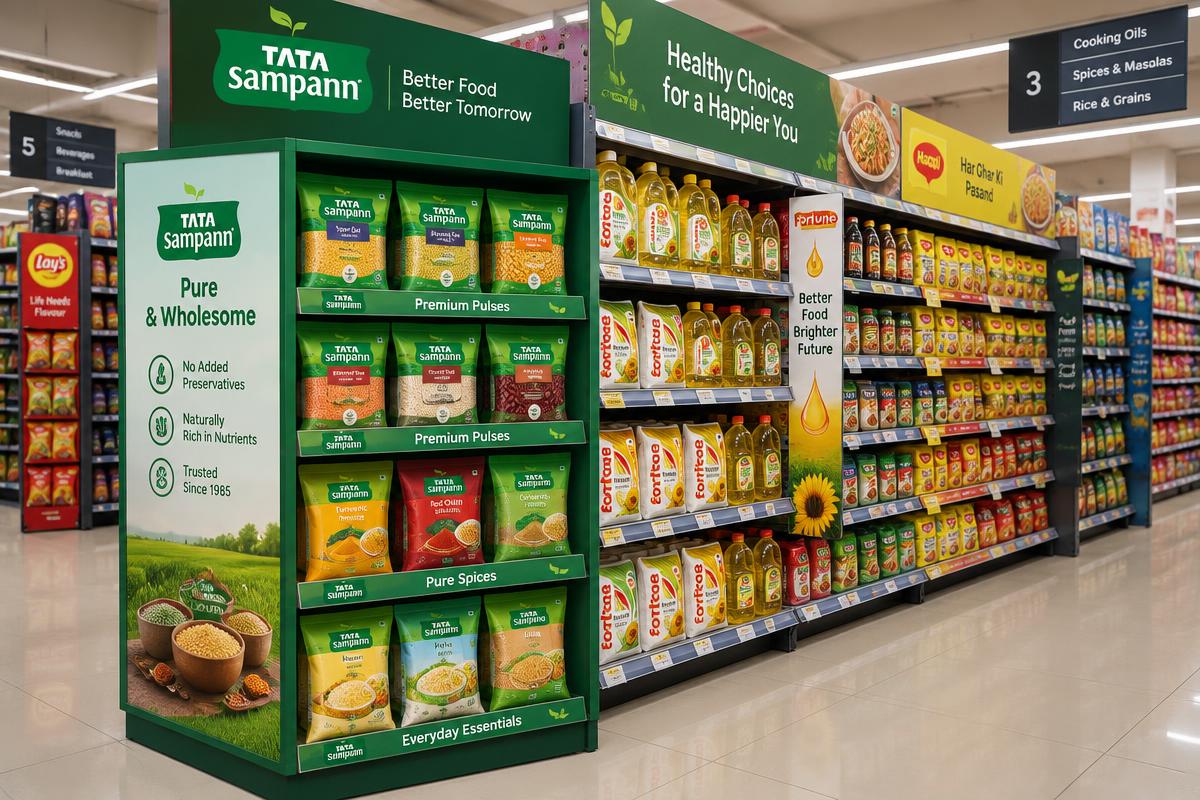
Retail & Sampling
Visual Merchandising
Shelf branding, FSUs and visual merchandising that win the aisle.
Door-to-Door Marketing guides, pricing and playbooks
- Door-to-Door Marketing Cost in India: Price Guide & Budget Breakdown
- How to Plan a Door-to-Door Marketing Campaign: Step-by-Step Guide
- Door-to-Door Marketing Ideas That Drive Sales: Proven Formats
- Door-to-Door Marketing vs Digital Ads: Which Delivers Better ROI?
- How to Choose a Door-to-Door Marketing Agency in India: Vendor Checklist
- Door-to-Door Marketing for Banking, Finance & Insurance: The Complete Playbook
- Measuring Door-to-Door Marketing ROI: Formula, Attribution & Worked Example
Related searches
What people look for when they are researching this format.