Industry
BTL Activation for FMCG
Drive trial and shelf offtake with sampling, in-store promoters and RWA activations.
Overview
On-ground marketing for FMCG
FMCG's on-ground problem is shelf offtake and repeat purchase, not awareness — most shoppers already recognise the category, so the job is converting a shopper standing at the shelf into a first pick-up, and then making sure the product is still visible and in stock the next time that shopper returns. Sampling puts trial directly in someone's hand at the point nearest to purchase, while in-store presence and shelf visibility decide which near-identical SKU actually gets picked in the few seconds a shopper spends deciding.
FMCG purchase decisions mostly happen in front of the shelf, within seconds, driven by what's visible, what's being demonstrated and whatever sample is already in hand. Trial is the lever that moves a shopper from a competitor SKU to this one, but that only becomes repeat purchase if the product is still on the shelf and visible the next time the shopper is in that store. Because the decision window is so short, the counter conversation and eye-level visibility matter more than the campaign's total reach.
The problem
What FMCG marketers are actually solving for
Not awareness in general — the specific commercial problem this category runs into.
- Converting footfall into shelf pick-up at the exact aisle, not just brand recall
- Repeat purchase after a single trial, when the next basket is decided by habit and availability
- Modern trade and kirana behaving completely differently in the same market, so one playbook rarely fits both
- Shelf space and visibility competing against several near-identical SKUs at the same price point
- Festive and seasonal spikes needing stock, promoters and permissions aligned at the same time
Running a large-format mall activation for a category that is actually won or lost in kirana
Formats
Formats that work for FMCG
Product Sampling
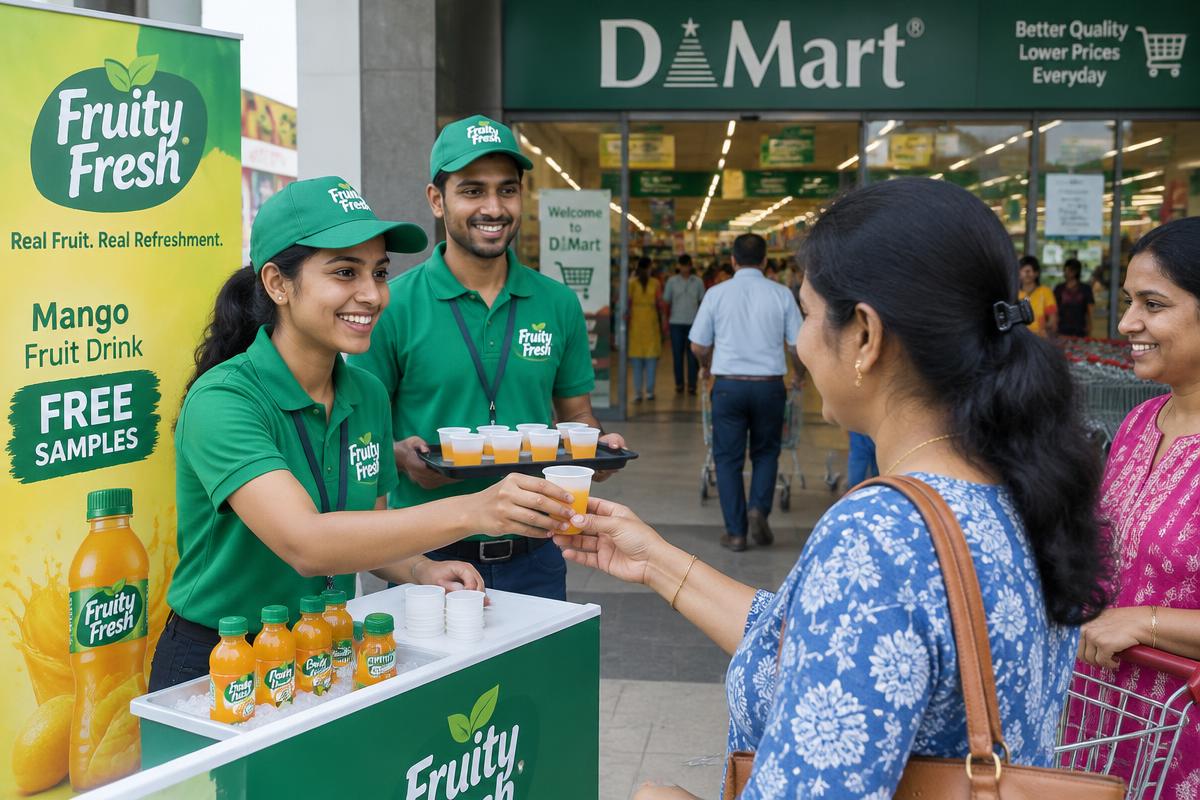
Hands product into the shopper's hand at the point nearest to purchase, converting trial directly into a buying decision while the SKU is still top of mind.
In-Store Promotion
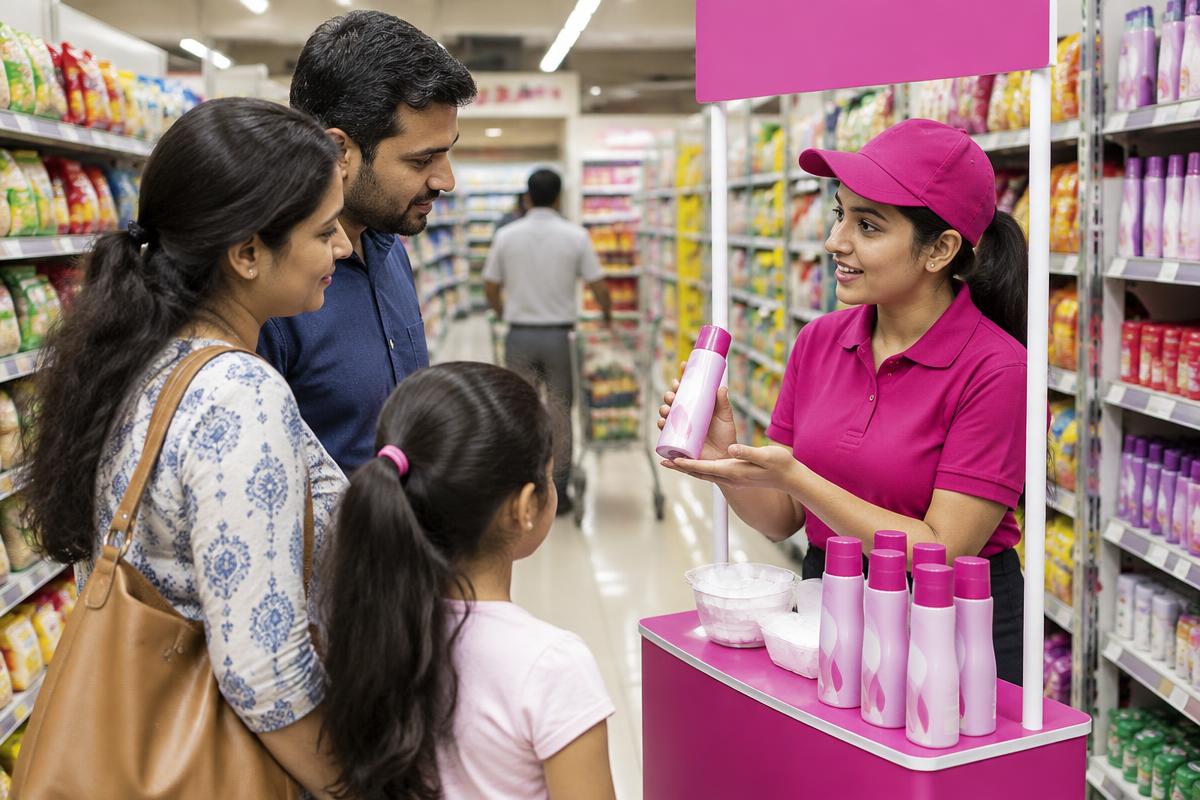
Trained promoters work the shelf at the moment of selection, directing attention to the SKU and handling the one or two objections that stop a pick-up.
Visual Merchandising
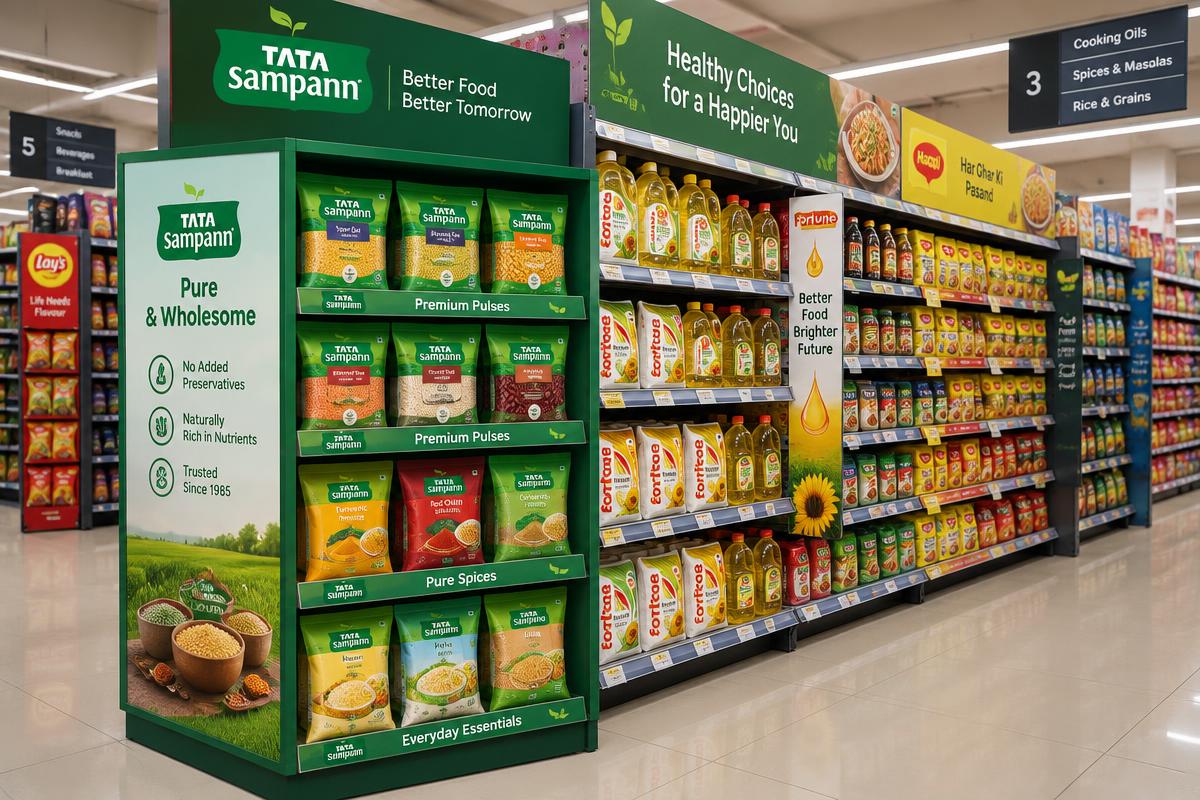
Wins the aisle through shelf placement, planograms and eye-level visibility where several near-identical SKUs compete for the same half-second of attention.
RWA & Society Activation
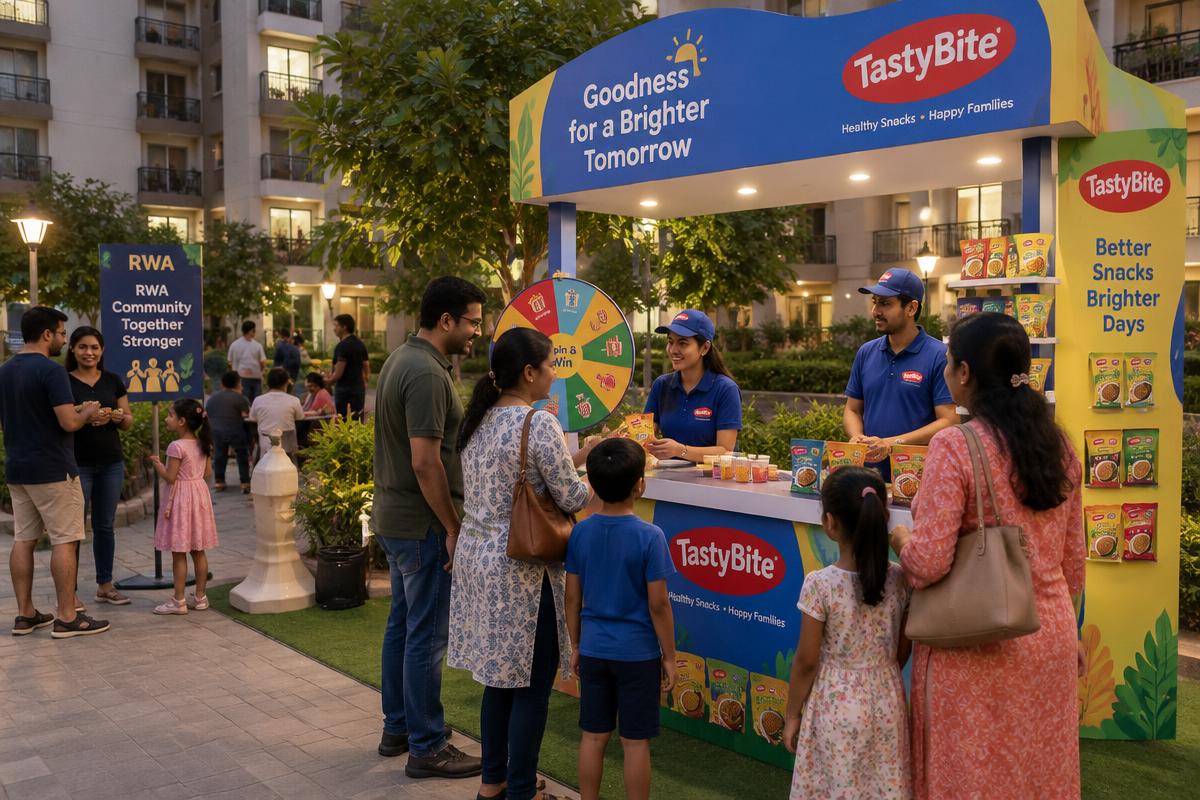
Reaches households directly at home, useful for categories bought in bulk or on a replenishment cycle rather than an impulse basis.
Canopy Activation
Puts the brand in front of market shoppers at the point they are already buying groceries, for categories sold as much through general trade as modern trade.
Recommended
Services we recommend for FMCG
Each links to the full service page, with pricing and a costed example.
Retail & Sampling
Product Sampling
Targeted product sampling that drives trial and repeat purchase.
Activations
RWA & Society Activation
Reach families at home through gated society and RWA activations.
Retail & Sampling
In-Store Promotion
In-store promoters and demos that convert shoppers at shelf.
Retail & Sampling
Visual Merchandising
Shelf branding, FSUs and visual merchandising that win the aisle.
Mobile & Outdoor
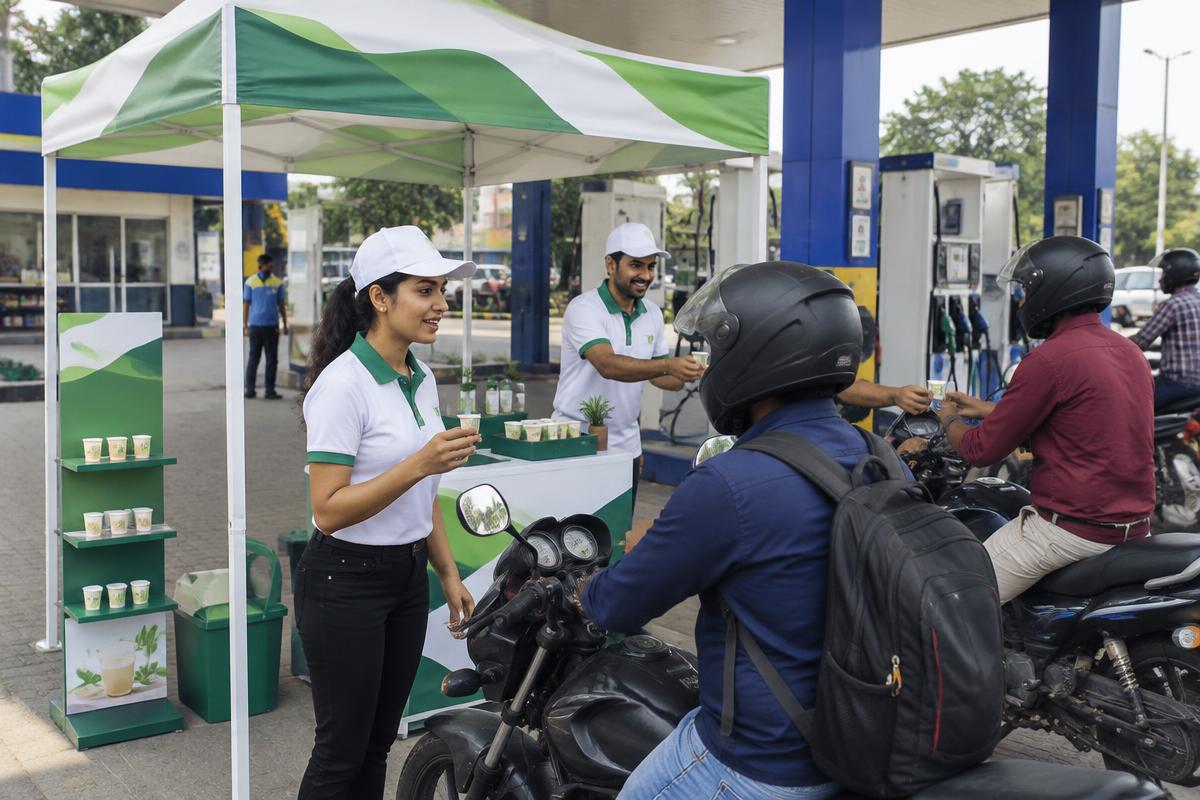
Canopy Activation
Branded canopy activations at petrol pumps, markets and haats.
Measurement
What FMCG campaigns are measured on
Every campaign reports the same way: attendance against roster, geo-tagged and time-stamped photographs per venue, contacts engaged counted on the capture tool rather than estimated, and leads verified by callback before they are counted. Weak locations show up in the first week, which is the only point at which they can still be fixed.
| Metric | Why this category tracks it |
|---|---|
| Samples distributed against stock issued and reconciled | Reported daily per venue, against the agreed target |
| Trial-to-repeat-purchase tracked at store level | Reported daily per venue, against the agreed target |
| Shelf visibility and share of shelf audited per outlet | Reported daily per venue, against the agreed target |
| Cost per contact and cost per converted trial | Reported daily per venue, against the agreed target |
| Outlets covered against the planned distribution universe | Reported daily per venue, against the agreed target |
Timing
When FMCG activity peaks
Festive season (September to November) drives the highest offtake window for most FMCG categories, as gifting and stocking-up behaviour peaks, and it is also the highest-cost window for promoters and venue space. Categories tied to temperature, such as beverages and personal care, see a second peak between February and April. Outside these windows, activity is usually sized down to maintenance-level sampling and merchandising rather than large activation spend.
Compliance
Compliance for FMCG activity
Category-specific requirements, stated in general terms rather than as legal advice.
- Food-safety compliance for any edible sample handled on ground
- Accurate labelling and weights-and-measures compliance on sample packs
- Stock reconciliation records for free samples, to prevent leakage
- Retailer or mall permission for in-store promoter placement
- Data-capture consent where contests or coupons collect contact details
FAQ
FMCG activation FAQs
Which BTL formats work best for FMCG brands?+
product sampling, in-store promotion and visual merchandising tend to carry the most weight for FMCG, because hands product into the shopper's hand at the point nearest to purchase, converting trial directly into a buying decision while the SKU is still top of mind.
How is on-ground activity measured for FMCG?+
Against the metrics this category is actually run on: samples distributed against stock issued and reconciled, trial-to-repeat-purchase tracked at store level, shelf visibility and share of shelf audited per outlet and cost per contact and cost per converted trial.
When should a FMCG brand run activations?+
Festive season (September to November) drives the highest offtake window for most FMCG categories, as gifting and stocking-up behaviour peaks, and it is also the highest-cost window for promoters and venue space. Categories tied to temperature, such as beverages and personal care, see a second peak between February and April. Outside these windows, activity is usually sized down to maintenance-level sampling and merchandising rather than large activation spend.
How do we know if sampling is actually converting to purchase?+
Track trial-to-repeat at store level over the following weeks rather than only counting samples distributed on the day. Samples handed out is an activity count, not a sales number, and the two are routinely confused when a campaign is reported.
Should an FMCG brand prioritise modern trade or kirana?+
It depends on the category's actual distribution footprint, not general assumptions. A brand sold mostly through small-format kirana gets far more from a canopy and in-store promoter programme across many outlets than from a handful of premium mall activations.
What makes an in-store promoter effective rather than just present?+
Product knowledge of the specific SKU, the ability to handle the two or three real objections at that shelf, and a pitch timed to the few seconds a shopper actually spends deciding — not a scripted monologue a shopper walks past.
FMCG activations in metro cities
- Product Sampling in Mumbai
- RWA & Society Activation in Mumbai
- Product Sampling in Delhi
- RWA & Society Activation in Delhi
- Product Sampling in Gurgaon
- RWA & Society Activation in Gurgaon
- Product Sampling in Noida
- RWA & Society Activation in Noida
- Product Sampling in Bangalore
- RWA & Society Activation in Bangalore
- Product Sampling in Hyderabad
- RWA & Society Activation in Hyderabad
- Product Sampling in Chennai
- RWA & Society Activation in Chennai
- Product Sampling in Kolkata
- RWA & Society Activation in Kolkata
- Product Sampling in Pune
- RWA & Society Activation in Pune
- Product Sampling in Ahmedabad
- RWA & Society Activation in Ahmedabad