Ideas · 11 min read · Updated 2026-10-04
Brand Activation Ideas That Drive Sales: Proven Formats
5 tried-and-tested brand activation ideas for Indian brands — engagement mechanics, lead-capture hooks and how to size one before you commit a budget.
Quick answer
The best brand activation ideas pair a strong engagement mechanic with a reason to leave contact details, so attention converts into a verifiable lead rather than just a photograph. Among the options for brand activation, Gamified engagement zones and Product demonstration stations are the ones most brands pilot first.
Key takeaways
- Every idea needs a hook, a reason to stay, and a way to capture a contact
- Launches where recall and trial matter more than raw coverage
- Pilot two ideas at the same venue before scaling either one
- Trial uptake runs 35%–60% of contacts, and lead capture 8%–22% — size stock and forms to that range
- Refresh the reward or the script before replacing a format outright once response starts to fade
Formats that work for brand activation
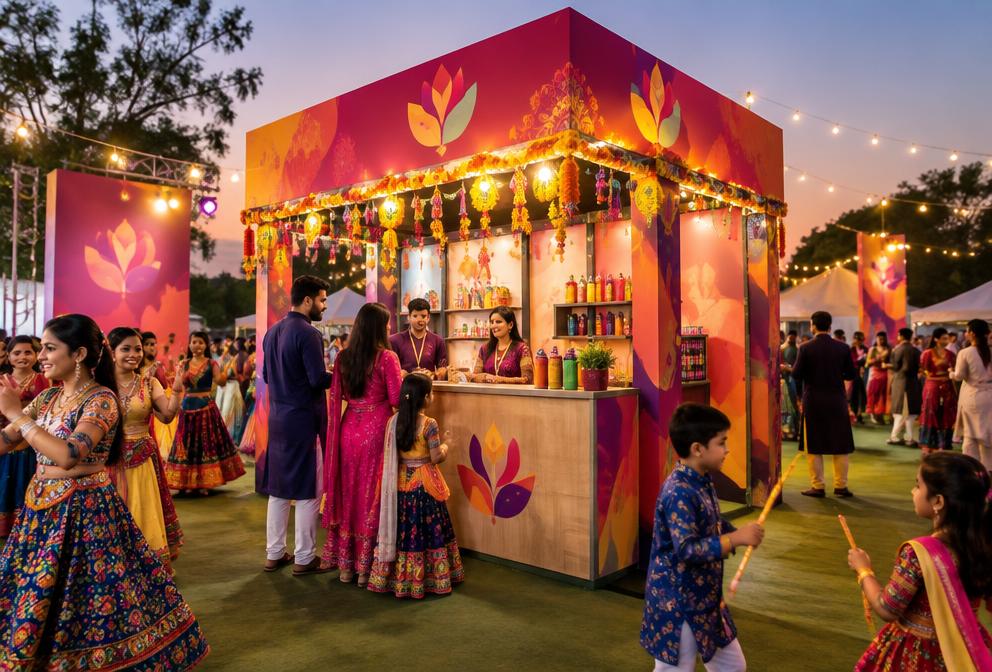
Brand activation is the experience-design layer of on-ground marketing: a space built around a game, a demonstration or an interactive moment that gives a visitor a reason to stop, play and hand over attention voluntarily. It sits underneath BTL strategy as one of the formats chosen, and it is the format picked specifically when the objective is engagement and recall, not just footfall or coverage.
Every format below is really the same three ingredients arranged differently: a hook that earns a few seconds of attention, a reason to stay for the pitch or the demo, and a mechanism that turns the conversation into a contact a sales team can follow up on. Where an idea underperforms, it is almost always one of those three ingredients that is missing, not the idea itself.
People give attention and personal data far more readily when they have just done something — played a game, answered a question, completed a small challenge — than when they are simply pitched to. An activation designed around that mechanic converts a passer-by into a willing participant first, and a willing participant hands over usable contact details and remembers the brand afterwards, which is the basis of the engagement-rate and lead-rate numbers a brand activation is judged on. That mechanism is what should be protected when an idea is adapted for a smaller budget — cut the fabrication or the team size before cutting the part of the format that is actually doing the work.
- Gamified engagement zones — Spin-the-wheel, prize games or quiz formats that gate a small reward behind a short interaction, built to drive footfall into a specific area of a venue.
- Product demonstration stations — A staffed counter where the product is shown working rather than described, used for categories where seeing is what converts.
- Interactive photo and social moments — A designed photo-op or branded prop that visitors want to be seen with, built to be shared rather than just viewed.
- Instant-win sampling booths — Sampling paired with an instant-win mechanic, so trial and a small reward happen in the same interaction instead of two separate asks.
- Data-capture lounges — A seated, low-pressure area for longer-form data capture or a product consultation, used where a lead needs more than a thirty-second conversation to qualify.
Matching the format to your goal
People give attention and personal data far more readily when they have just done something — played a game, answered a question, completed a small challenge — than when they are simply pitched to. An activation designed around that mechanic converts a passer-by into a willing participant first, and a willing participant hands over usable contact details and remembers the brand afterwards, which is the basis of the engagement-rate and lead-rate numbers a brand activation is judged on. In practice that means choosing the format by KPI rather than by novelty: if the goal is engagement rate: visitors who stop versus visitors who pass, lead with a format built for conversation and demonstration; if the goal is social shares or photo-moment pickups generated, lead with the cheapest format that still captures a verifiable contact.
Running every format at once to see what sticks is the expensive way to learn this — picking two candidates against the goal above and piloting them side by side is the cheap way.
- For engagement rate: visitors who stop versus visitors who pass — favour a format built around demonstration over one built around a game
- For trial rate among engaged visitors — favour whichever format has the simplest, fastest data-capture step
- For a tight budget — favour the format that needs the smallest team and the cheapest venue in the list below
- For brand recall over conversion — favour the most shareable or photographable format, accepting a weaker lead count in exchange
Where these formats perform
Brand Activation is usually run at mall atriums, corporate parks, college campuses and residential societies. Engagement volume differs sharply between them, which is why the same idea can look like a hit in one venue type and a failure in another.
Choosing the venue type before choosing the idea is the right order — a format that depends on a long, unhurried conversation needs a venue where people are not already walking somewhere else, which rules out some of the higher-footfall rows in the table below despite the bigger numbers.
| Venue type | Contacts on a typical day |
|---|---|
| Mall atrium | 400–1,500 |
| Corporate park | 200–700 |
| College campus | 500–2,000 |
| Residential society | 120–400 |
Localising the idea by city and language
An idea written and rehearsed in one city's language does not automatically transfer to another — a pitch that lands in Mumbai can fall flat delivered word-for-word in a tier 2 town with a different primary language, even with the same hook and the same reward.
The fix is cheap relative to the risk: brief the local promoter team on the idea's intent rather than a fixed script, and let the pitch be re-expressed in the local language rather than translated line by line.
What a reasonable capture rate looks like
Trial or demo uptake typically runs 35%–60% of contacts, and lead capture 8%–22% — both are planning ranges, not promises, but they are the numbers to size stock, forms and follow-up capacity against before day one.
A number well outside either range is informative either way: comfortably above it suggests the pitch and the hook are working better than planned, and comfortably below it is worth diagnosing on day one rather than at the end of the pilot.
Sizing one format for a single day
Before committing stock or a bigger team to any one idea, size it for one day at the format's usual venue — the arithmetic below is what that sizing looks like.
Both numbers at the bottom of this example are what you compare against once the idea actually runs; if the real cost per lead comes in noticeably higher, the fix is usually the pitch or the venue, not the idea itself.
One day at a mall atrium
6 promoters, 1 senior promoter, 2 supervisors and 1 technician, one day, mid-band venue fee.
- Contacts engaged (mid-point)
- 950
- Trial or demo uptake (35%–60%)
- 451
- Leads captured (8%–22%)
- 143
- Day cost (venue + manpower, ex-GST)
- ₹1,03,200
That is ₹229 per trial and ₹722 per lead on this one day — the number to beat before adding a second day or a second venue.
Scaling the idea across the full pilot
A single day tells you whether the idea works; a full pilot tells you whether the economics hold once training and one-time setup are spread across more days. Here is the same idea run for the 4 days used throughout this site's worked examples for brand activation.
Cost per lead almost always falls once the pilot runs longer than a day, because the team and the fabrication are paid for once and reused, while contacts, and therefore leads, keep accumulating.
| Metric | One day | Full 4-day pilot |
|---|---|---|
| Contacts engaged | 950 | 3,800 |
| Leads captured | 143 | 570 |
| Spend, ex-GST | ₹1,03,200 | ₹4,12,800 |
| Cost per lead | ₹722 | ₹724 |
Best-fit situations for these ideas
These formats are not interchangeable — they fit specific buying situations better than others.
If none of the situations below match your brief closely, that is usually a sign the budget would do more for you in a different service altogether than in forcing brand activation to fit.
- Launches where recall and trial matter more than raw coverage
- Categories that need a demonstration rather than a pitch to convert
- Brands wanting a shareable, photographable moment
- Programmes judged on lead quality rather than lead volume alone
- Venues with high dwell time where a short pitch alone underperforms
Refreshing an idea instead of replacing it
An idea that worked for a season rarely needs to be discarded when response starts to fade — it usually needs one element changed, not the whole format.
Rotate the reward, the local-language script or the visual theme on a seasonal cycle, and keep the underlying mechanic — the hook, the pitch and the capture step — exactly as it was when it was working.
The trap that wastes the idea
Two mistakes account for most of the wasted budget on an otherwise good idea, and neither is about the creative.
No capture, no campaign
A game mechanic that is fun but unrelated to the product, so it drives footfall without brand recall No script for the moment after the game, so engagement never converts into a pitch An idea is only as good as the contact it leaves behind.
An idea that cannot capture a contact is a party, not a brand activation campaign.
Testing before you scale
Run the top two ideas side by side at the same venue type for a 5–10 working-day pilot, keep the one with the lower cost per lead, and only then commit the budget for a multi-city run.
Judge the comparison on engagement rate: visitors who stop versus visitors who pass and cost per lead together, not on which one drew the bigger crowd — a louder idea that converts worse is not the winner just because it photographed better.
Keep the losing idea's materials rather than discarding them — a format that loses this round at this venue type can still be the right choice at a different venue type later in the programme, and rebuilding it from scratch a second time costs more than storing it did.
Planning brand activation?
Get an itemised plan and quote from BTL Marketing Co. within 24 hours.
Frequently asked questions
How much does brand activation cost in India?+
Indicative pricing is ₹2L – ₹75L per campaign. The final quote moves with the cities chosen, the number of days, team size, fabrication and the permissions each venue needs, so ask for an itemised breakup rather than one lump-sum figure.
How quickly can brand activation go live?+
A single-city pilot can go live in 5–10 working days. A regional rollout across several cities typically needs 14–21 working days once permissions and fabrication are built into the schedule.
Which Indian cities can run brand activation?+
Brand Activation can be planned in any of India's 70 tracked cities, including Mumbai, Delhi, Gurgaon, Noida, Bangalore, Hyderabad, with tier 2 towns quoted on request.
How is brand activation different from a general on-ground activation?+
Brand activation is built around a specific designed interaction — a game, a demo, a photo moment — chosen to make a visitor stop and participate. A general on-ground activation is judged on coverage across many locations; brand activation is judged on engagement and recall at one well-built space.
What makes a brand activation mechanic work?+
It has to connect to the product, not just be entertaining on its own. A game disconnected from the brand drives footfall to the zone without anyone remembering what the zone was for, which shows up as a high engagement rate but a weak lead-quality rate afterwards.
How much of the engaged audience actually converts to a lead?+
Planning ranges put trial acceptance among engaged visitors at roughly 35% to 60%, and lead capture among engaged visitors at roughly 8% to 22%, depending on the mechanic and category. Of leads captured, around 45% to 70% typically qualify after verification.
What is a low-budget brand activation idea?+
The cheapest reliable version is a small team at the lowest-cost venue in your mix, running one format with a simple capture mechanic — for a single day that is roughly ₹1,03,200 before GST, per the worked example above.
Can two brand activation ideas be tested at the same time?+
Yes, and it is the fastest way to find a winner — run both at the same venue type on the same days with separate promoters and separate capture codes, then compare cost per lead rather than raw contacts, since the louder idea does not always convert better.
How do I know when an idea needs refreshing rather than replacing?+
Watch the capture rate, not the crowd size — if contacts stay steady but trial uptake or lead capture drifts down over consecutive weeks, the hook is tiring and a reward or script refresh usually restores it; if contacts themselves fall, the venue or timing has likely changed, not the idea.
Do these brand activation ideas need a professional fabrication budget?+
Not to start. The cheapest version of most formats on this page uses standees, a table and a simple prop rather than a custom build, and the fabrication budget is better spent after a pilot has already shown which idea is worth making permanent.
Brand Activation in top cities
More on brand activation
- Brand Activation Cost in India: Price Guide & Budget Breakdown
- How to Plan a Brand Activation Campaign: Step-by-Step Guide
- Brand Activation vs Digital Ads: Which Delivers Better ROI?
- How to Choose a Brand Activation Agency in India: Vendor Checklist
- Brand Activation for Consumer Brands: The Complete Playbook
- Measuring Brand Activation ROI: Formula, Attribution & Worked Example